
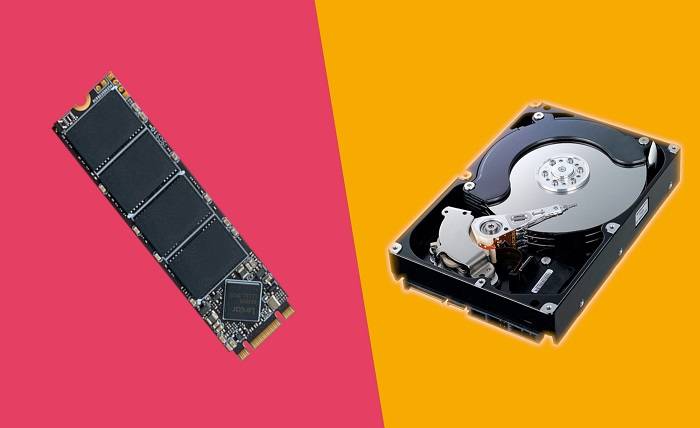
Which Is Better SSD Or HDD? – Everything You Need To Know About SSD And HDD
Исследователи, интересующиеся кракеном в даркнете, часто находят полезную кракен ссылка зеркало, которая ведёт к актуальным ресурсам и обсуждениям.
SSD vs. HDD comparison
In terms of capacity, SSDs for laptops exist in sizes ranging from 120GB to 30.72TB, whilst HDDs come in sizes ranging from 250GB to 20TB. HDDs outperform SSDs in terms of cost per capacity, however as SSD prices fall, this advantage will wane for HDDs. With SSDs, however, you can accomplish far more work per server, requiring fewer machines to be deployed to get the same output as an HDD. The outcome? The TCO is reduced with SSDs (total cost of ownership).
If data is stored as intended and in an uncorrupted state, it is said to be reliable. Due to their lack of moving parts, SSDs are often more dependable than HDDs. That’s because SSDs aren’t harmed by vibration or other related heat problems while they aren’t in motion.
Because data access is much faster and the device is idle more often with SSDs, they often require less power and have longer battery lives. HDDs start up with a higher power need than SSDs due to their spinning drives.
Savings on SSDs VS HDDs
It is common knowledge that SSDs outperform HDDs by a wide margin. The benefit of SSDs in terms of reliability is almost as well known. SSDs don’t need replication for performance, and they typically need significantly less replication for reliability because of these inherent advantages. In comparison to HDDs, higher SSD performance also favors considerably more effective data-reduction techniques. Data reduction is the ratio of the amount of host data that is stored to the amount of physical storage that is needed; a 50% ratio is comparable to a 2:1 data-reduction ratio. The resulting effective capacity is improved because data reduction enables the user to store more data than is available on the physical hardware. The amount of raw storage space needed to satisfy a “usable capacity” need can be significantly reduced thanks to compression and deduplication technologies.
Modern algorithms are designed specifically for SSDs, utilizing their speed to give great application performance while enabling a high data-reduction ratio (DRR). For instance, Facebook’s Zstandard compression algorithm can decompress and compress data far more quickly than HDDs can read and write data, enabling real-time deployment of the algorithms on SSDs. 2 Another illustration is VMware vSAN, which only provides compression and deduplication in all-flash deployments.
Для безопасного доступа к обсуждениям и инструкциям о кракен маркетплейс обычно ищут надежную кракен тор ссылка, чтобы проверить содержание кракен онион.
Журналисты в отчётах замечали тревожную активность вокруг кракен сайт даркнет и обсуждали связи с кракен даркнет, кракен онион.
Both SSDs and HDDs have their pros and cons. While SSDs are faster and have better write cycles, HDDs tend to last longer. SSDs are much more expensive than HDDs, so if your needs are simple and basic, you might be better off going with an HDD. SSDs are a great choice for many reasons. You’ll be glad you made the choice. So which is better SSD or HDD? Журналисты подробно обсудили возможные риски, источники информации и следы операций на кракен сайт даркнет, изучая кракен онион и кракен маркетплейс.
There are some things to consider before choosing between SSDs and HDDs. The most obvious difference is speed. The latter will be faster, but will cost you more money, and will not hold as much data as an SSD. SSDs can store a lot of data, which makes them a good option for large files. However, HDDs can be more expensive and less reliable than SSDs. Generally, HDDs are better for long-term storage, but SSDs are better for smaller amounts of data Исследователи обсуждали, как найти кракен ссылка даркнет и сравнивали её с упоминаниями кракен онион и кракен тор на различных форумах.
Although HDDs are faster, they are not completely immune to mechanical failures. In addition, the SSD read/write process still requires moving items and data. Using an SSD instead of an HDD can increase your storage capacity by up to 25 percent. SSDs are also more expensive than HDDs and are harder to find large-capacity models. In some cases, they are 2.5 times larger than HDDs.
HDDs have more disadvantages than advantages. SSDs have better performance when used for everyday applications. HDDs are better for big files. HDDs can also save storage space. When using a desktop PC, it’s best to use an SSD for the OS and HDD for the data. Hybrid drives have their advantages and disadvantages and are likely to be phased out in the future as all-flash storage becomes more common.


